Hydrogeochemist


Showing 1 - 20 of 41 results

Following your experiment at the Australian Synchrotron there are certain tasks that users can complete including a user feedback survey and claiming reimbursement for travel expenses.
Modelling and experimentation - a powerful combination in probing mechanical properties of ion irradiated materials through nanoindentation.

Groundwater experts from ANSTO and UNSW have led a collaboration of Australian and American researchers to analyse the composition of deep, very old groundwater and develop a new conceptual framework that describes the degradation of carbon over time in the subsurface.

The User Advisory Committee (UAC) are pleased to present this year's invited speakers.

ANSTO has been tracking and publishing data on fine particle pollution from key sites around Australia, and internationally, for more than 20 years.

Explore ANSTO's range of publications and reports available for the public.

The design and implementation of alternative energy sources is one of the greatest scientific and social challenges of our time.

ANSTO User Meeting 2021 - Speakers
Researchers based at Monash University and the Swedish Museum of Natural History have pioneered the use of nuclear imaging techniques at ANSTO’s Centre for Neutron Scattering to resolve long-standing problems in plant evolutionary history linked to wildfires.
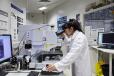
The Infrared Microspectroscopy beamline combines the high brilliance and collimation of the synchrotron beam through a Bruker V80v Fourier Transform Infrared (FTIR) spectrometer and into a Hyperion 3000 IR microscope to reach high signal-to-noise ratios at diffraction limited spatial resolutions between 3-8 μm.
ANSTO Nuclear Fuel Cycle researcher recognised for contributions to crystallography and structural chemistry on actinides and lanthanides.
An ANSTO radiochemist has been awarded a scholarship to carry out research at the world-renowned Sloan Kettering Cancer Center in New York.
Investigators from UNSW and ANSTO have provided insights into the dynamic interactions of atoms in a promising material for sodium-ion batteries.
Applications, Recent results, publications.

A world-class national research facility that uses accelerator technology to produce a powerful source of light-X rays and infrared radiation a million times brighter than the sun.