

Showing 1 - 20 of 204 results
Pioneering Australian partnership of art and science reveals hidden masterpiece
The world synchrotron community gathers
Event held to mark anniversary of SPRing-8 in Japan.
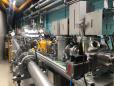
Medium Energy X-ray Absorption Spectroscopy Beamline (MEX-1 and MEX-2)
The Medium Energy- X-ray Absorption Spectroscopy beamlines will provide access to XANES and EXAFS data from a bending magnet source, optimised for cutting-edge applications in biological, agricultural and environmental science in an energy range that is not currently available at the Australia Synchrotron.
Synchrotron shines path toward light-activated drug delivery
Getting the facts on milk fats

Melbourne Access Proposals
ANSTO’s user office in Melbourne offers access to the Australian Synchrotron, a world-class research facility with over 4,000 user visits per year. ANSTO seeks collaboration and partnerships with research organisations, scientific users and commercial users.
First synchrotron light is a milestone for new instruments at ANSTO’s Australian Synchrotron
NSTO’S major project to introduce eight new beamlines at the Australian Synchrotron has reached a milestone with the delivery of ‘first light’ to the new MEX-1 beamline.
Synchrotron shines path towards light-activated drug delivery
Cancer drug development to be turbocharged as ACRF funding brings ‘broadband’ protein analysis to Australia

The Australian Synchrotron
A world-class national research facility that uses accelerator technology to produce a powerful source of light-X rays and infrared radiation a million times brighter than the sun.
Restoring soil carbon
Restoring soil carbon can bring benefits for agricultural productivity and climate change mitigation.
ANSTO's Australian Synchrotron Goes Solar for a Greener Future
More than 3,200 solar panels have been installed across the rooftops of the Australian Nuclear Science and Technology Organisation’s (ANSTO) Australian Synchrotron in Clayton, offsetting enough power to light up the whole MCG for more than five years.

Project BRIGHT
The BRIGHT Project will expand the beamline infrastructure of the Australian Synchrotron to increase both its capacity and capabilities.
Synchrotron reveals an elusive molecular chameleon
Single session radiation therapy nearing a reality
ANSTO’s Australian Synchrotron has been working on an initiative that could substantially improve radiotherapy treatment for cancer patients.

Corporate Publications
Explore ANSTO's range of publications and reports available for the public.
Infrastructure - Cultural Heritage
In Australia and the Southeast Asia basin, the ANSTO facility offers a wide range of unique nuclear-beam techniques for cultural heritage research.
Funding and infrastructure boost for Australian Synchrotron
$80.2 million in new funding to expand the research capabilities of the Australian Synchrotron.
Expertise in characterising materials for lithium ion batteries
Pioneering work on materials for energy production, such as lithium ion batteries, has made ANSTO a centre of specialist capabilities and expertise.